


 Geneva, Switzerland
 What you'll do
You will join the EU-funded Horizon Europe Doctoral Network Physics and Applications of Negative Ions (PANIONS), an ambitious research programme exploring the properties and applications of negative ions across a wide range of fields. Negative ions occur in many natural environments and are used in modern applications. Their unique properties make them ideal quantum systems for benchmarking state-of-the-art theories in atomic and molecular physics.
As a Doctoral Candidate, you will contribute to advancing the understanding of negative ions from atomic to cosmic scales, helping bridge the gap between fundamental science and applications. The PANIONS network brings together 14 Doctoral Candidates across 11 host institutions in Europe, combining advanced theoretical models and sophisticated experimental methods to study atomic and molecular anions and their interactions in environments ranging from vacuum and plasmas to interstellar clouds and planetary surfaces.
Within this programme, you will develop a broad scientific and technical skillset and collaborate with leading European research infrastructures while completing an internship with a relevant industrial company. The position (DC12) is offered within the framework of the Marie Skłodowska-Curie Actions, which train young researchers and support the careers of tomorrow’s leaders in research and industry.
Your responsibilities
- Work on ion beam developments and techniques for the production and characterization of radioactive anions for the ISOLDE facility at CERN (https://isolde.web.cern.ch).
- Contribute to the development of techniques to efficiently produce negative ions from radioactive species at ISOLDE, including work in the offline laboratory.
- Participate in online experiments for the characterization of radioactive anions.
- Spend a research period at the University of Gothenburg, joining the Laser Spectroscopy Research Group led by Professor Dag Hanstorp (https://www.physics.gu.se/english/research/laser-spectroscopy).
- Take courses and receive basic training in laser and ion beam technologies.
- Participate in research on the photo detachment of negative ions.
Still here? Let's make a quick check about
Your profile
- You hold, or are about to obtain, a Master’s degree (MSc) or an equivalent qualification that allows you to embark on doctoral studies. If you are currently completing your MSc, you may apply, provided the degree is obtained before June 2026 (the PANIONS contract cannot start until the MSc is completed).
- You are within the first four years of your full-time research career after obtaining your degree.
- You do not hold a PhD.
- You are motivated, able to work independently, and able to collaborate with researchers in a large international research project.
Your skills
- Knowledge in one or more of the following areas: ion beam physics, ion sources, atomic and molecular physics, nuclear physics, laser technology, electronics, programming, or data collection.
- You have proficiency in English.
Employment conditions
- This Doctoral Candidate position is “Efficient negative ion sources for radioactive species” (DC12) with PhD-awarding institution, University of Gothenburg
- Planned collaborations / secondments: Artemis Analytical Ltd., UK and University of Gothenburg, Sweden (Contacts: Lukas.Nies@cern.ch, mia.au@cern.ch, Sebastian.Rothe@cern.ch, Dag.Hanstorp@gu.se.)
- Diversity is an integral part of PANIONS and of the EU’s mission ([1] / [2]). The network promotes an inclusive research culture where collaboration is encouraged. Information related to gender and nationality is collected solely to monitor representation in the field. The application system currently only allows two gender entries (M/F); if you identify with another gender, please indicate this in your CV and the system entry will be disregarded.
- Applications may be viewed by members of the PANIONS network involved in the selection process.
Global Benefits at CERN
Let's get you ready
Be sure to meet the eligibility criteria
- You must submit two identical applications — one via this CERN job ad and one via the University of Gothenburg portal.
- You must not have held a contract with CERN (Graduate, Student, Associate...) at more than 50% presence for more than 12 months in the last three years.
- Please ensure you meet the criteria listed in the “Your profile” and “Your skills” sections mentioned above for this position.
You will need these documents to complete your application
- Your CV (English or French) including a list of scientific publications
- A copy of your last (highest) qualification or a certificate of achievement (if you don't yet have your paper diploma) including transcript of records
- Contact details of two academic or professional references (name, position, e-mail, telephone and indicating the relationship with the applicant)
- A cover letter
Your CERNDepartment
Overview of CERN
Discover a world where the impossible is made possible!
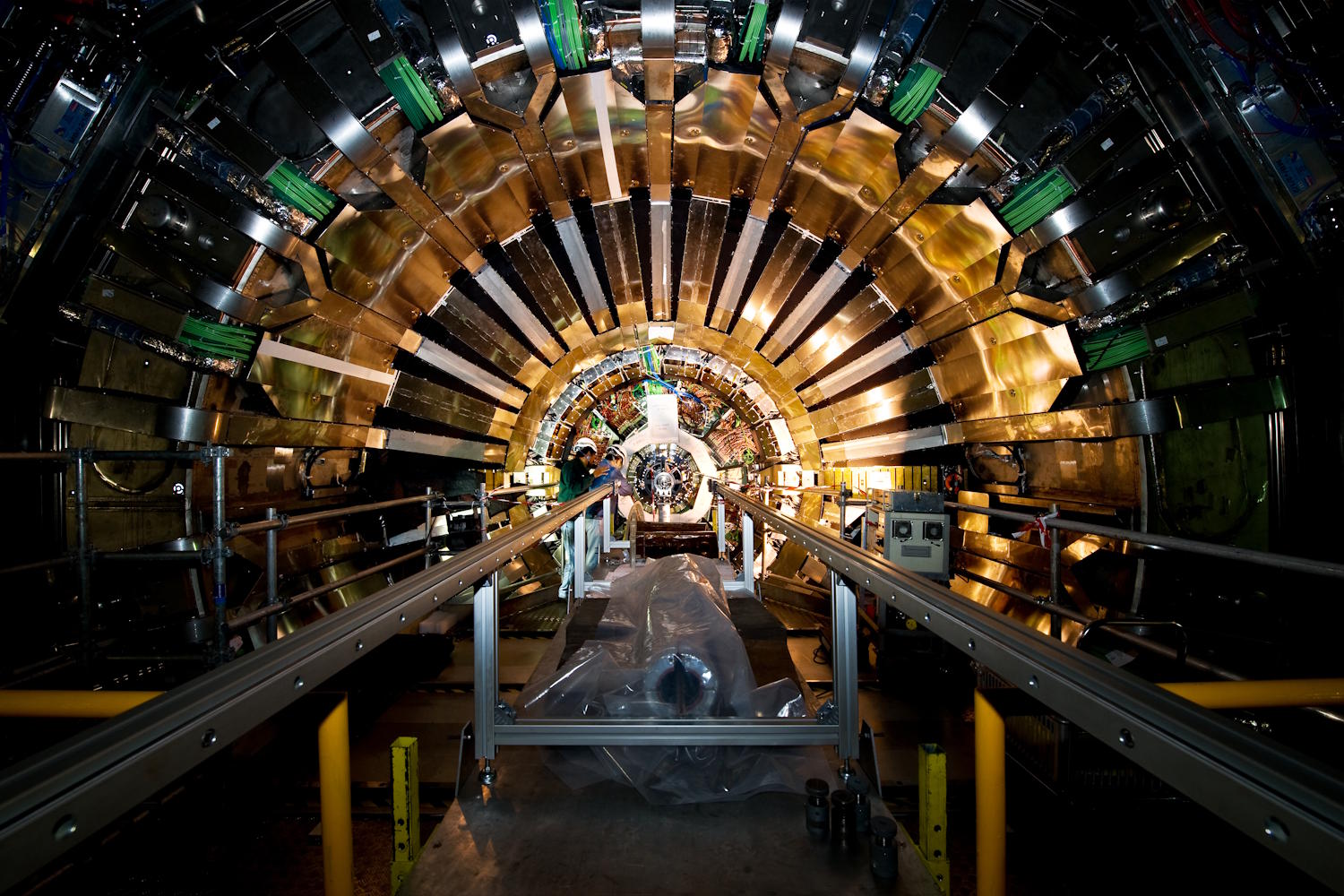
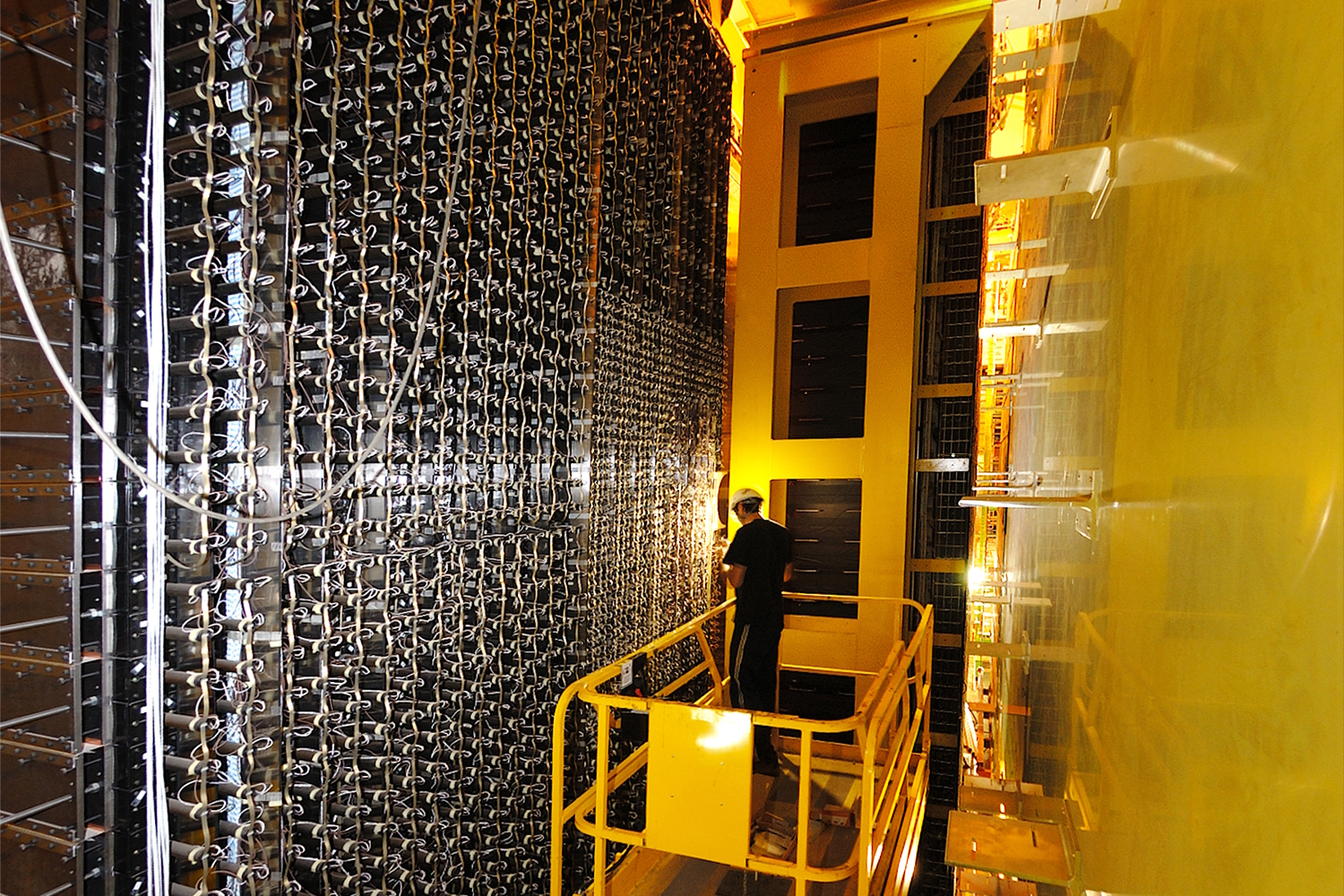
At CERN, the European Organization for Nuclear Research, we are pushing the frontiers of science and technology. Our groundbreaking work brings together not only physicists but also a diverse range of professionals from engineering, technical, scientific, and administrative fields. Together, we foster an environment where innovation and collaboration thrive.
Every day, we face exciting new challenges and opportunities to contribute to cutting-edge research that shapes our understanding of the universe. We meet these challenges through the diverse perspectives within our teams, ensuring every contribution is valued and driving our shared sense of inclusion and purpose. Diversity is a core value of CERN since its foundation, and it remains central to our mission and continued success.
If you are ready to be part of a dynamic, inclusive community pushing the boundaries of knowledge, CERN is the place where your curiosity and skills can thrive. Be part of our mission to uncover what lies at the heart of the universe! TAKE PART!
Ready To apply?
Be prepared with our resources and tips
All good?
Still have a doubt ? Here are the most frequently asked questions
-
What should I expect during my first week at CERN?
Your onboarding at CERN includes a comprehensive induction programme, which starts with an official welcome session at the beginning of each month. In addition, you will receive important information both before and after your arrival to ensure a smooth transition into your new role. This process is designed to help you get acquainted with CERN’s environment, your team, and the tools and systems you’ll be using.
-
How big would the team be?
The size of the team you'll be working with at CERN depends on the specific role and department. Some teams are small and highly specialized, while others are larger and more interdisciplinary. During the interview process, you'll have the opportunity to learn more about the team structure for the position you are applying for. -
What is the working language at CERN?
The working languages at CERN are English and French. However, it is not always mandatory to speak both languages to work at CERN. We offer language training to help you acquiring the other language. -
What support does CERN provide for relocation?
CERN does not offer direct assistance with relocation. However, depending on your role and specific criteria, you may be eligible for certain benefits such as an installation allowance and coverage of travel expenses to join CERN. These benefits are designed to help ease the transition when relocating to the Geneva area. For more information, please consult the “Salary, Benefits and Support“ page. -
Do I need a visa to work at CERN?
Whether you need a visa to work at CERN depends on your nationality and the duration of your stay. CERN assists with the necessary visa and work permit processes for its employees and visitors. The specific requirements will be communicated to you during the recruitment process. -
What would my salary be?
Salaries at CERN are determined by a structured scale. Salaries are based on your role, qualifications, and experience, and are not subject to negotiation. Specific details will be provided as your application progresses. For more information, please refer to the dedicated page.